
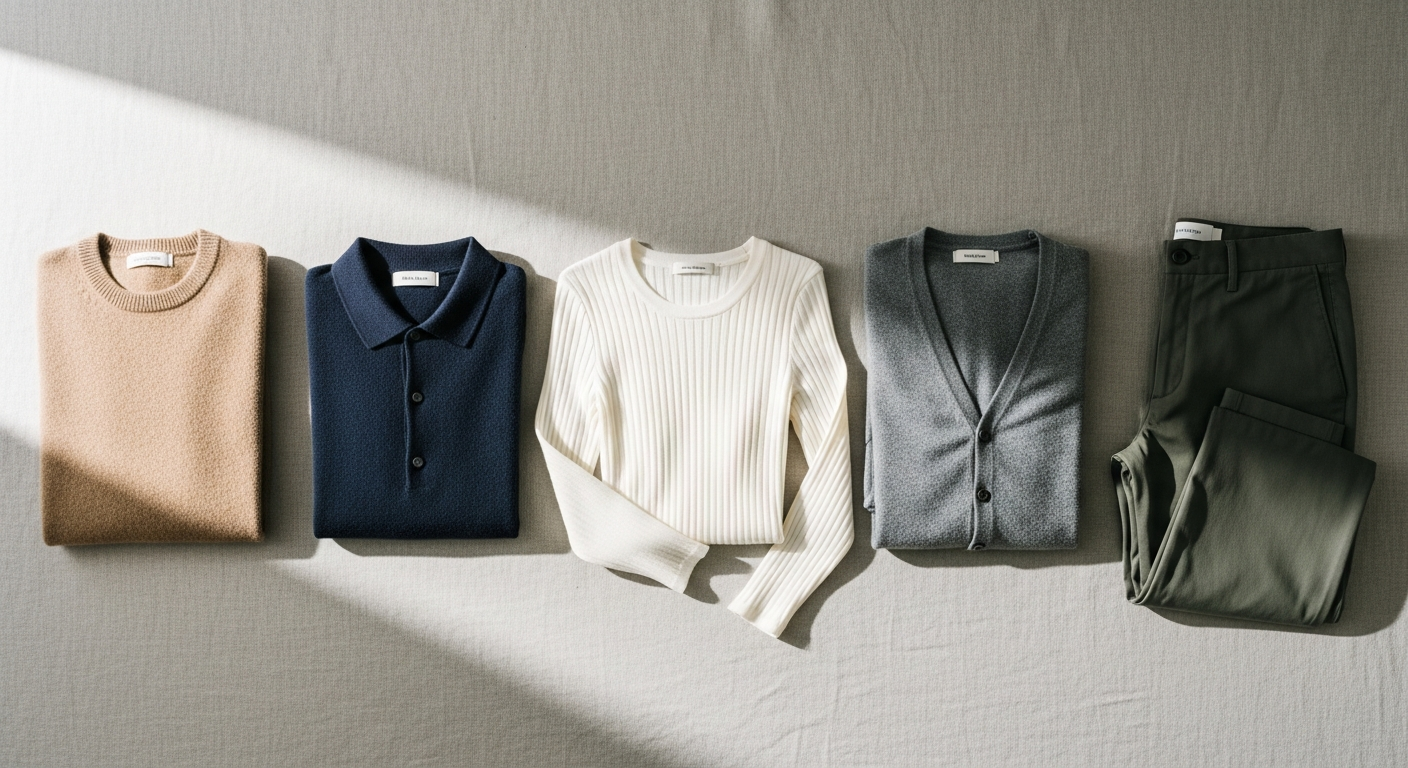
There is a phrase that keeps surfacing at the wool auctions in Sydney and Fremantle these weeks. The buyers say it under their breath: good spec lines. Higher-grade lots, scarce, sought after. It is the technical language of a market — and, without knowing it, also the language of those who long ago stopped buying to replace.
Merino wool has become a precious material again, in the most literal sense. It is not an opinion, it is a fixing. The merino wool price of the Australian fibre has risen by more than forty percent in twelve months, reaching levels not seen since 2019. Demand grows, supply contracts, and the gap between the highest grades and standard wool widens every week.
An economic story, read culturally
One could read this story as purely economic, and stop there. But read culturally, it tells something else: nature, simply, is not infinite. A sheep produces three or four kilos of fleece per year. It takes months of grazing, sorting, shearing and washing before that fleece becomes a garment. That rhythm cannot be compressed to meet a demand spike.
In an era when eighty consumers in a hundred describe themselves as value-seeking — looking for value, not discount — the rising cost of the natural raw material is the economic proof of a truth the world of quiet luxury has observed for years: buying less, buying better is not a moral posture, it is arithmetic. The cost per wear of a merino garment worn for ten seasons remains lower than the cost per wear of three synthetic garments bought to chase as many trends. Choosing premium merino wool, in this light, becomes the rational move.
The validation of invisible luxury
The rising price of wool is therefore not the triumph of conspicuous luxury. It is the validation of invisible luxury. Whoever wears a fine merino garment does not need a logo to know what they are wearing. They know that garment costs more — and lasts longer, and can be repaired, and will not end up in landfill after nine months. The price of the raw material becomes, then, the measure of value, not the problem.
What remains to be seen is who will hear this signal, and who will keep pretending not to. The market has stopped being a backdrop: it has stepped onto the stage and taken the floor. It is saying, for those who care to listen, that the wardrobe that lasts — that ages well — is not nostalgia. It is, once again, a rational choice.