
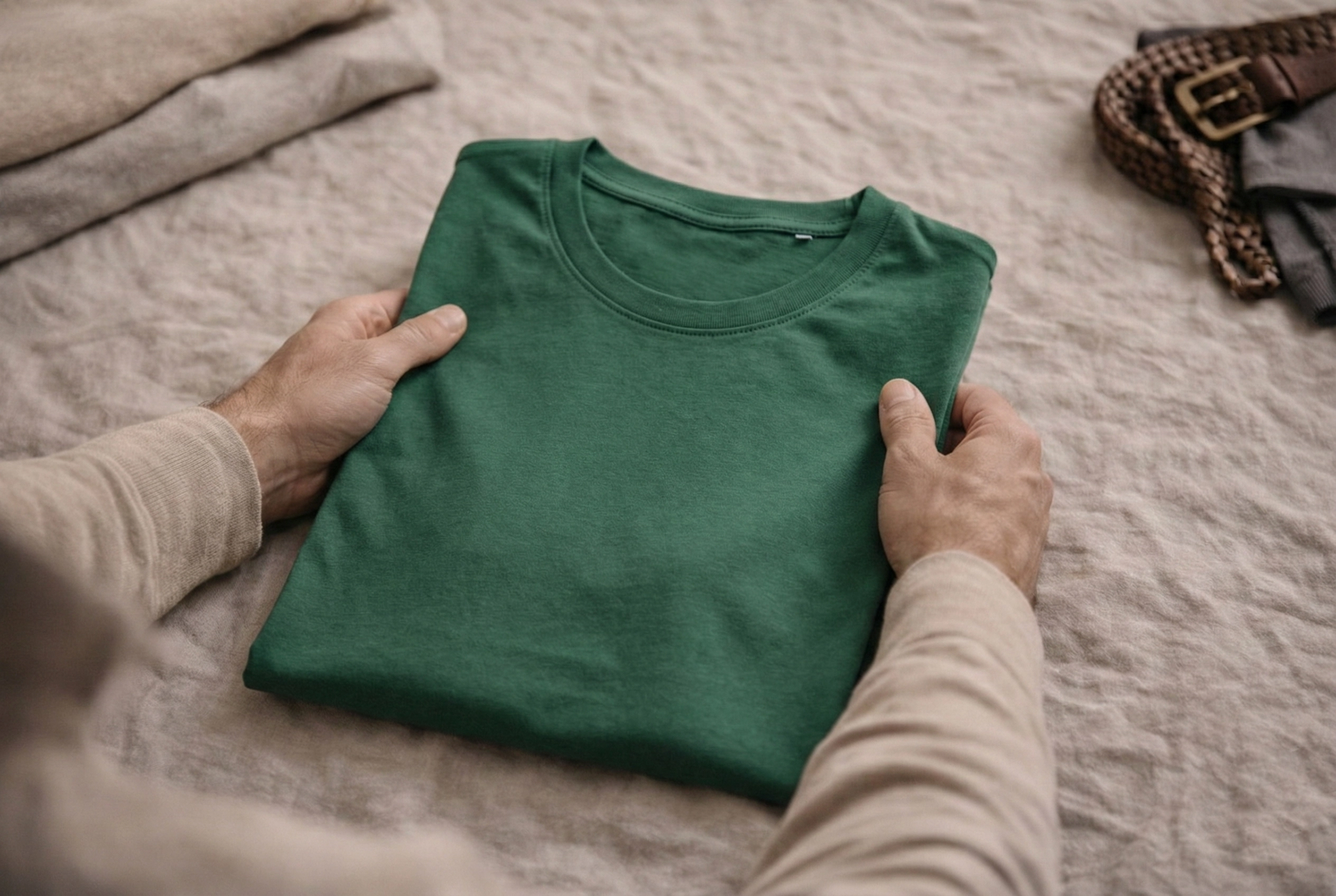
Opening a suitcase or drawer and finding shirts marked by deep lines is demoralizing. We often blame the fabric or the lack of space, but the real culprit is the geometry of the fold.
A correct fold distributes tension evenly along the fibers, minimizing crease points. The goal isn’t to compress but to guide the fabric into a shape that respects its natural structure. With the right technique, even a cotton shirt can survive a suitcase without looking like it’s been through a time machine.
To do
The “military” fold: Button the shirt, lay it face down. Fold one side from the shoulder to the hem, then the sleeve back. Repeat on the other side. Fold the bottom third up, then in half.
The tissue paper trick: Place a sheet of tissue paper between folds. The paper reduces friction and prevents sharp creases.
The roll for knitwear: Knits should never be folded. Roll them loosely from the bottom up. This prevents stretching at fold lines and saves space.
“How you store a garment says as much about you as how you wear it.”
Deep Dive: The Science Behind Quality
A garment’s quality is measured over time. Discover how merino fibre maintains shape, softness and performance wash after wash.
Go to Merino UniversityRelated Story
A father’s wardrobe
When quality choices become a legacy. A story about family and wardrobes.
Read the story →Want to build your system in 30 days?
We’ve condensed this philosophy into a practical action plan. Day by day, elimination and acquisition.
The Invisible Wardrobe — 12 pieces, 30 days
Beyond the Guide
Italian Sartorial Excellence
From theory to practice: discover how artisan tradition transforms the finest fabrics into timeless masterpieces.
Related Reading
Want to understand the science behind the materials?
Explore Merino University →